


 Directory
Thesis defense: Fabien Sassolas
| When |
Oct 30, 2025
from 02:00 to 05:00 |
|---|---|
| Where | Salle Condorcet |
| Contact Name | Fabien Sassolas |
| Attendees |
Chunlong Chen, Chunlong.Chen@curie.fr Domitille Chalopin-Fillot, domitille.chalopin-fillot@u-bordeaux.fr; Anamaria Necsulea, anamaria.necsulea@univ-lyon1.fr; Benjamin Audit, benjamin.audit@ens-lyon.fr (co-encadrant); Marie Sémon, marie.semon@ens-lyon.fr; Jean-Nicolas Volff, jean-nicolas.volff@ens-lyon.fr (directeur de thèse). |
| Add event to calendar |
 vCal
vCal iCal
iCal
|
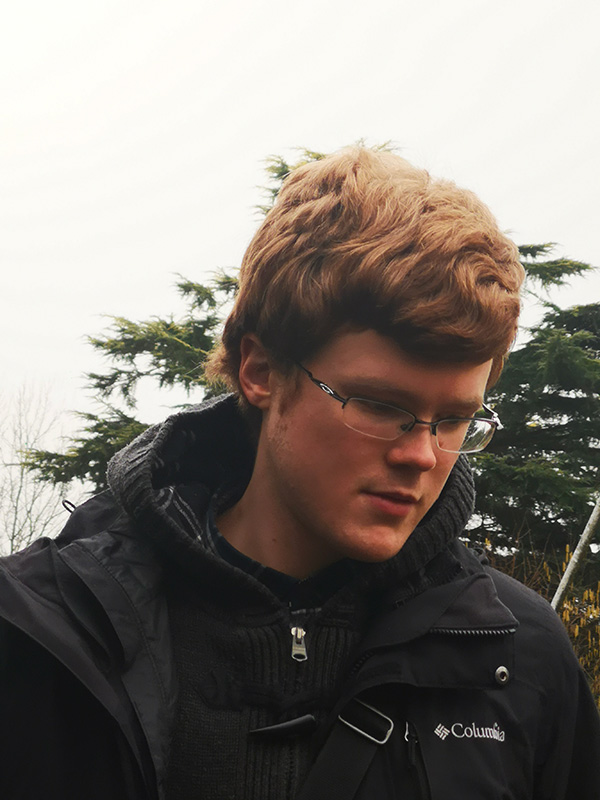
On October 30th, Fabien Sassolas of the team of Kiran Padmanabhan will support his thesis entitled:
"Conservation and evolution of DNA sequence-mediated nucleosome positioning in eukaryotes"
Abstract:
The nucleosome is a complex of histones and ~150 bp of DNA. It is a major constituent of chromatin in eukaryotes, covering 75–90% of genomes. Histones are present in all eukaryotes analyzed. The positioning of nucleosomes by the DNA sequence is a parameter studied since the 80s and the discovery that nucleosomes did not form on polyA. Multiple models exploiting the sequences experimentally associated with histones have been proposed to predict nucleosome positioning. Our team has developed a polymer model where the elastic parameters depend on the sequence of the DNA wrapped around histones, allowing the prediction of the positioning of nucleosomes “ab initio”.
This model was first exploited in yeast, then in humans. It has been shown that the sequence encodes Nucleosome Inhibitory Energy Barriers (NIEBs) that are bordered on each side by 2 – 3 nucleosomes. We studied experimental data from Mus musculus, Danio rerio, Caenorhabditis elegans, Drosophila melanogaster, Saccharomyces cerevisiae, Arabidopsis thaliana, Oryza sativa and Trypanosoma brucei. We confirm that the NIEBs correspond to sequences refractory to nucleosome formation in all eukaryotes studied. NIEBs in all these organisms are associated with similar oscillations in GC-content levels in relation to substitution profiles in their evolutionary lineages.
Transcription termination sites (TTS) are associated with NIEBs in yeast and humans. In contrast, the relationship of NIEBs to transcription start sites (TSS) varies: those of H. sapiens are anti-correlated with TSS, while those of S. cerevisiae are directly associated. Our analysis shows that while NIEBs are associated with TTS in all species studied, they are associated with TSS in some species (S. cerevisiae, A. thaliana, C. elegans, T. brucei), and in other anti-associated (H. sapiens, M. musculus, D. rerio, O. sativa). These results suggest that genome size influences the relationship between NIEBs and TSS.
It has also been shown that Alu retroelements in humans and chimpanzees are associated with the creation of new barriers, which they generate by the insertion of their polyA tail during retrotransposition. We show that NIEBs are associated with AT-rich microsatellites and transposable elements (TEs) in all species studied. We show that L1 retroelements are associated with NIEBs in humans, pigs and mice, thus allowing inter-species comparisons. Other specific TEs are also associated with NIEBs, such as the B1 retroelements in mice or the Tc1/Mariner DNA transposons in Danio rerio. This relationship between TEs and NIEBs raises the question of their coevolution. We can propose two hypotheses, that are not mutually exclusive. Firstly, nucleosome-free regions could be used for the integration of these TEs into eukaryotic genomes. Secondly, NIEBs could also be mobilized and even created by the insertion of these TEs.
In conclusion, this work reveals the existence of sequences positioning nucleosomes in the genome of all eukaryotic species analyzed, thus revealing a general principle of chromatin organization by the DNA sequence in these organisms. They also reveal how repeated sequences such as microsatellites and transposable elements can modulate this chromatin structure through their instability and mobility. Thus, this study paves the way for a comparative genomics approach to better understand the evolution of chromatin in eukaryotes.